
Abodu Junior ADU Conversion: The Hesperia Owner’s Guide
We stock and install Abodu-compatible junior ADU conversion systems in Hesperia, with typical installed pricing running $85,000-$145,000 depending on your existing structure and utility tie-ins. Most conversions from our Ranchero Road corridor clients move from permit to final inspection in 4-6 months. The number goes on the page before the conversation ends - that’s not a policy, it’s just how decisions get made.
Most Hesperia owners discover their junior ADU conversion needs attention when the city flags a mismatch between the Abodu unit’s factory specs and the as-built conditions of their existing home - a bedroom that was never formally permitted, a garage with no fire separation, or a utility lateral that can’t handle the added load. These aren’t part failures in the traditional sense; they’re integration points where the modular system meets site-specific reality.
Which Abodu Models This Applies To
The junior ADU conversion category applies to Abodu’s interior-focused lineup - primarily the Abodu One configured as a attached junior unit, and any Abodu studio module being integrated into an existing residential footprint rather than placed as a detached unit. To identify your specific configuration, check the Abodu serial plate (usually mounted on the electrical panel enclosure) for the model prefix: “J-” indicates junior conversion configuration, while “D-” indicates detached placement requiring different foundation and utility work.
We’ve worked with Abodu units shipped from 2019 through 2024, and there’s a meaningful compatibility gotcha: pre-2022 units used a 100-amp subpanel standard that San Bernardino County now requires to be upsized to 125 amps for any junior ADU with electric cooking equipment. The OEM spec sheet won’t flag this - it’s a local amendment. For aftermarket equivalents on electrical components, we specify Siemens or Square D panels that meet the same UL listing as Abodu’s factory choice, at roughly 15% lower material cost, with full warranty parity. We don’t substitute on structural connectors or fire-rated assemblies; those stay OEM or engineer-specified equivalent.
Signs Your Abodu Junior ADU Conversion Is Failing
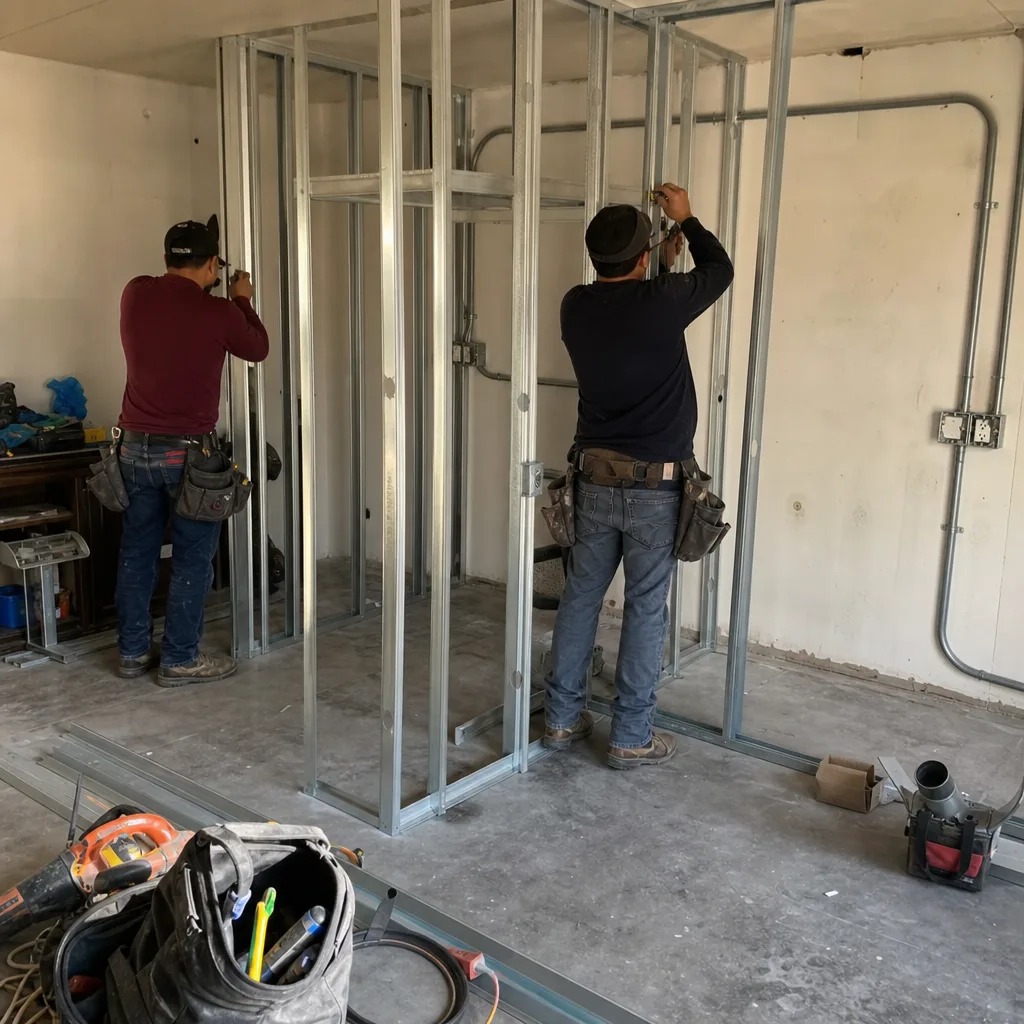
- Permit rejection at plan check for “inconsistent floor area calculations.” This happens when the Abodu unit’s factory dimensions don’t account for your existing home’s actual wall thicknesses, which in Hesperia’s 1970s-1990s housing stock often run 2×4 exterior walls with stucco that adds 1.5 inches per side. The discrepancy triggers a full re-submittal.
- Moisture readings at the marriage wall where Abodu meets existing structure. The factory weather barrier ends at the module edge; your existing home may have a different drainage plane. In Hesperia’s high-desert climate with freeze-thaw cycles from November through February, any gap in this transition becomes a water intrusion point within two seasons.
- HVAC short-cycling or inability to maintain setpoint. Abodu units ship with Mitsubishi or equivalent mini-splits sized for the module’s envelope only. When that module is inserted into a larger thermal mass (your existing home), the load calculation changes. The symptom is a system that runs constantly in July or can’t keep up in January.
- Electrical inspector requiring AFCI/GFCI upgrades not shown on original Abodu drawings. California’s Title 24 updates in 2022 and 2025 changed branch circuit requirements. Factory drawings from 2021 or earlier often don’t reflect this, and the Abodu electrical package may need supplemental circuits added at the conversion point.
- Sewer backup or slow drainage after conversion occupancy. The Abodu’s low-flow fixtures meet WaterSense standards, but Hesperia’s older sewer laterals (particularly west of the I-15 corridor) may have insufficient slope or root intrusion that only becomes symptomatic when additional daily flows are added. The module isn’t at fault; the lateral is.
Replacement Cost & What’s Included
For a full junior ADU conversion remediation - meaning we take an existing Abodu integration that failed inspection or developed performance issues and bring it to code-compliant completion - Hesperia projects in our experience run $85,000-$145,000 all-in. The low end applies when we’re correcting a single system (electrical upgrade with permit amendment, or marriage wall weatherization with re-inspection). The high end involves foundation anchorage changes, full utility lateral replacement, and re-submittal of the entire permit set.
That range includes our permit set revision, all labor, materials, and San Bernardino County permit fees. Under Haven Standard Clause 1, you receive a written line-item price before any work begins - not a ballpark, not a “we’ll see.” Clause 5 locks the scope at signing; no additional charges for conditions we could have observed during our initial site visit. Our 365-Day Done Right Promise covers the integration work specifically: if the marriage wall leaks, if the panel won’t pass re-inspection, if the HVAC won’t hold setpoint, we return and correct it at no additional cost.
DIY or Call Us?
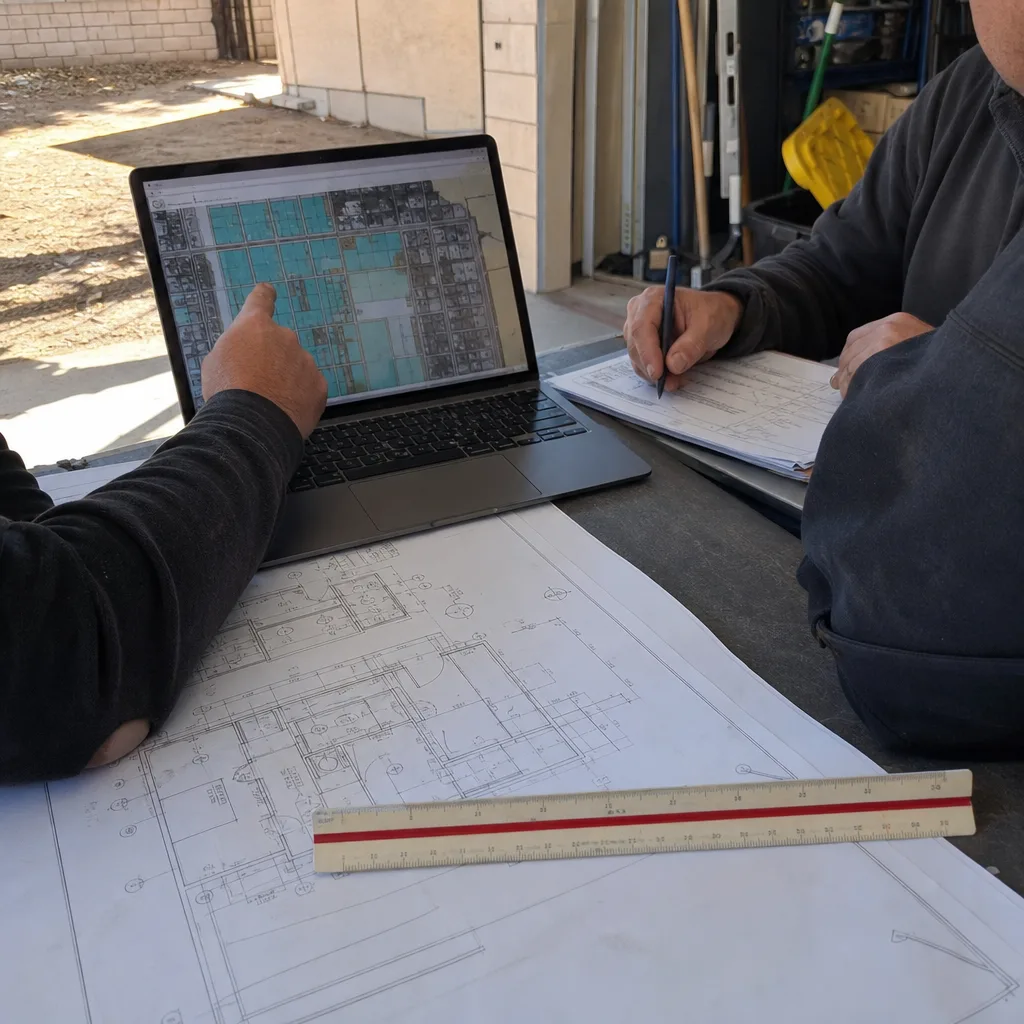
There’s a clear line here. An owner can safely verify their Abodu model number, photograph the serial plate, and check their original permit status through San Bernardino County’s online portal - that’s useful information that speeds our first conversation. What owners shouldn’t attempt: modifying the marriage wall assembly (fire-rated gypsum, structural connectors, and weather barrier in one system), upsizing electrical panels, or altering plumbing venting. These aren’t skill questions; they’re liability questions. A junior ADU conversion is permanently attached to your primary residence; a mistake doesn’t just affect the ADU.
We’re an independent service provider - not affiliated with Abodu - and we coordinate directly with their technical team when OEM specifications are needed. For a free Second Opinion on your existing conversion estimate, or to schedule a site visit with documented photo record, call us at (760) 493-7752.
FAQs
The modular components themselves carry a 10-year structural warranty from the factory; the integration work we perform is backed by our 365-Day Done Right Promise. In Hesperia’s climate, the critical wear point is the marriage wall seal, which we inspect at 12 months and recommend re-evaluating every 3-5 years given our UV exposure and thermal cycling. Call (760) 493-7752 to schedule a documented condition check.
Most conversion issues are repairable - electrical upsizing, weather barrier remediation, HVAC load recalculation. Full “replacement” means removing the Abodu module, which is rare and usually only triggered by structural settlement or marriage wall failure that compromises the primary residence. We assess which path applies during our initial site visit, with a written scope and price for either. Call (760) 493-7752 for an exact determination; estimates are free.
Single-system corrections (electrical, weatherization, HVAC recalculation) typically run 2-4 weeks once permitted. Full re-integration with revised foundation and utility work extends to 6-10 weeks. Permit timeline in San Bernardino County currently runs 4-8 weeks for junior ADU amendments, which we track in writing - not in conversation. Call (760) 493-7752 for a project-specific schedule.
We stock common electrical panels, weather barrier components, and structural connectors specified for Abodu integrations on our Hesperia service vehicles. Model-specific items (factory trim kits, proprietary connectors) we source direct with 3-5 day lead time. For urgent situations, we can install temporary measures to maintain habitability while OEM components arrive. Call (760) 493-7752 to confirm availability for your specific model and issue.
Written by Nadia Ellery, Owner, Ellery ADU Studio Hesperia at Ellery ADU Studio Hesperia, serving Hesperia and nearby areas.