
Last updated September 25, 2026
ADU Permits, Codes & Inspections in CA: What You Need to Know
AB 68, SB 13, and AB 3182 convinced thousands of California homeowners that ADU permitting had become straightforward. The laws are real, and they did remove the most abusive local barriers. But here’s what we see in Hesperia: state preemption stops at the property line, and local agencies still control utility connections, fire sprinkler determinations, and building standard interpretations. The layer where San Bernardino County Building and Safety stamps a permit set is where most projects actually live or die. In The Complete Guide to ADU in Hesperia, we’ll walk through what state law actually guarantees, what remains under local control, and how the three-agency permit stack in Hesperia operates in practice.
Quick Answer
California state law guarantees your right to build an ADU and sets 60-day approval timelines, but local agencies retain full authority over building codes, fire safety, utility connections, and inspection sequencing. In Hesperia, most ADU projects require permits from City Planning, San Bernardino County Building and Safety, and your utility district. Missing documentation at any layer resets the 60-day clock.
Table of Contents
- What State ADU Law Actually Preempts
- What Stays Under Local Agency Control
- The Three-Agency Permit Stack in Hesperia
- California’s 60-Day Timelines and What Resets Them
- Inspection Sequence for a Detached ADU in Hesperia
- JADU Deed Restrictions and Title Pitfalls
- What ADU Permitting and Construction Cost in Hesperia
- Common Mistakes to Avoid
- When to Call a Professional
- Frequently Asked Questions
What State ADU Law Actually Preempts
California’s 2020-2023 ADU reforms did three things that genuinely changed the landscape. First, they eliminated local owner-occupancy requirements for most ADUs. Second, they prohibited minimum lot sizes that would functionally ban ADUs. Third, they capped impact fees for ADUs under 750 square feet and reduced them for larger units.
These are not minor changes. Before SB 13, a city could require you to live on the property to rent the ADU. After SB 13, that requirement is preempted for ADUs permitted from 2020 forward. AB 68 added the 60-day “deemed approved” provision: if a local agency does not act on a complete ADU application within 60 days, the application is approved by default. AB 3182 further strengthened these protections by clarifying that HOAs cannot prohibit ADUs.
But here’s the critical distinction we explain to every Hesperia homeowner who calls us: preemption applies to land use decisions, not building code decisions. The state cannot and does not override the California Building Code, the California Fire Code, or local amendments adopted through proper process. When San Bernardino County Building and Safety says your detached ADU needs fire sprinklers because of access road width, that is not a land use denial. It is a building code determination, and state ADU law does not touch it.
We have seen homeowners in the new detached ADU in Hesperia process spend weeks arguing that “California law says you can’t deny my ADU” when the issue was never denial. It was a code compliance gap in their submitted drawings. The permit was not denied. It was held for correction. And those corrections do not count against the 60-day clock.
Key state preemptions to understand:
- Owner-occupancy: Banned for ADUs permitted January 1, 2020 through January 1, 2025; extended by subsequent legislation
- Minimum lot size: Cannot be used to prohibit ADUs if the underlying zoning allows residential use
- Replacement parking: Cannot be required when a garage is converted to an ADU
- Impact fees: Capped or eliminated for ADUs under 750 square feet; reduced proportionally for larger units
- HOA restrictions: Unenforceable if they would prohibit ADU construction
What state law does not preempt: setbacks beyond the statutory minimums, fire sprinkler requirements, utility connection standards, building material specifications, or inspection sequencing. These remain local.
What Stays Under Local Agency Control
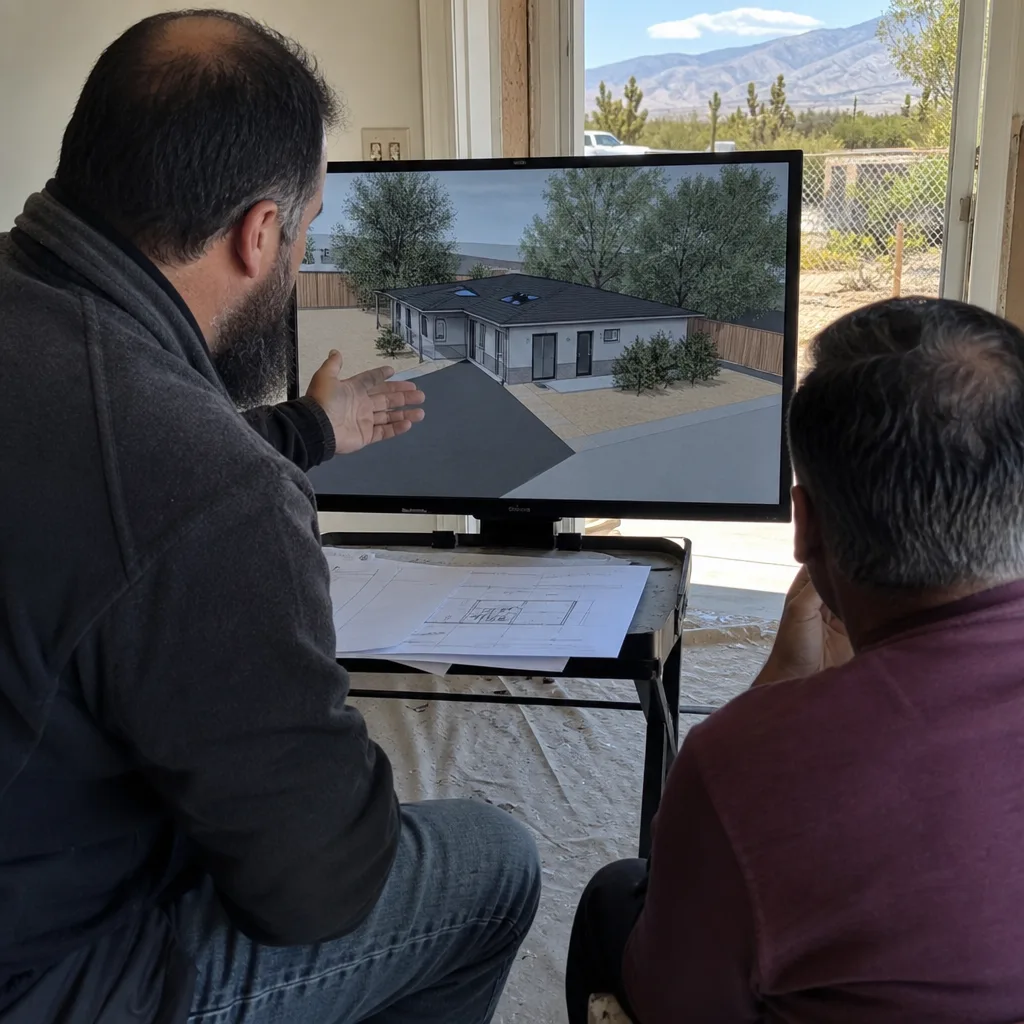
The Hesperia-specific layer is where projects succeed or stall. We have processed over 900 ADU permit sets since 2015, and the pattern is consistent: state law gets you to the counter, local code gets you through it. For ADU Warning Signs: A Hesperia Homeowner’s Reference Guide, see our dedicated resource.
Setbacks and lot coverage. State law sets maximum setback standards (typically 4 feet for side and rear), but local agencies can require greater setbacks for fire safety or access. In Hesperia’s hillside zones, we regularly see 10-foot rear setbacks required not because of zoning, but because the fire access road cannot accommodate closer construction. This is not a land use barrier. It is a fire code determination under California Fire Code Section 503, and it is fully enforceable.
Fire sprinklers. Whether your ADU needs sprinklers depends on three local factors: the primary dwelling’s sprinkler status, the ADU’s distance from the property line, and access for fire apparatus. In Hesperia’s older neighborhoods, particularly south of Main Street where 1970s and 1980s construction predates widespread residential sprinklers, we see this trigger frequently. The California Fire Code allows local fire marshals to require sprinklers in detached accessory structures based on response time calculations. Hesperia Fire District maintains specific apparatus access standards that differ from Victorville or Apple Valley.
Utility connections. State law requires that ADUs be allowed, but it does not mandate that utilities connect them for free, or on your timeline. In Hesperia, most properties fall under Hesperia Water District and Southern California Edison. The water district maintains its own capacity studies and will not issue a water meter release until San Bernardino County Building and Safety has approved the plumbing plan. Edison similarly requires a separate electrical service calculation. These are not permit denials. They are sequential dependencies, and they add weeks that the 60-day statute does not control.
Building standard interpretations. San Bernardino County has adopted local amendments to the California Building Code that affect ADU construction in Hesperia. The most significant: wind load calculations for the High Desert. Hesperia’s 3,000-foot elevation and exposure to Mojave Desert wind patterns trigger specific structural requirements for roof anchoring and wall bracing. A permit set drawn for coastal California will be rejected here. We see this most often with ADU design and permitting in Hesperia when homeowners bring plans from online services or out-of-county designers.
Septic and sewer. Properties outside Hesperia’s sewer service area require septic system evaluation. San Bernardino County Environmental Health Services conducts separate review of septic capacity for ADU additions. This is a third parallel track, and it is not subject to the 60-day ADU timeline.
The Three-Agency Permit Stack in Hesperia
Most Hesperia ADU projects require permits from three distinct agencies. Understanding which agency controls which decision prevents the submission gaps that reset your timeline.
Agency 1: City of Hesperia Planning Division
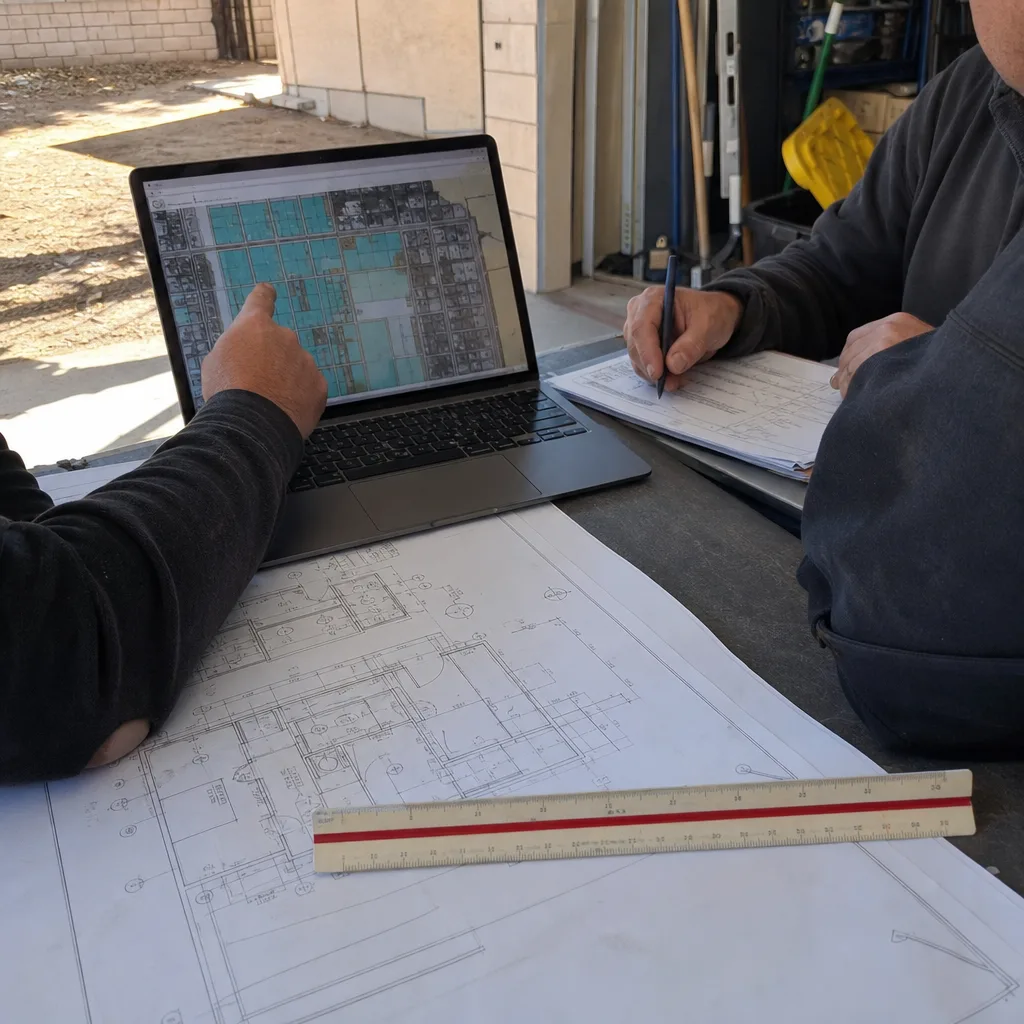
Planning reviews zoning compliance: lot coverage, height limits, and whether your ADU type is allowed on your parcel. For a garage conversion ADU in Hesperia, Planning confirms the garage was legally constructed and that conversion does not exceed allowed floor area ratio. For detached ADUs, Planning verifies setback compliance and issues a zoning clearance.
Planning does not review structural, electrical, or plumbing code. Submitting incomplete zoning information here creates the first delay. We have seen homeowners submit garage conversion applications without original permit records for the garage, forcing Planning to request historical research that adds two to four weeks.
Agency 2: San Bernardino County Building and Safety
Building and Safety operates Hesperia’s building permit function under contract. They review the full permit set for California Building Code, California Electrical Code, California Plumbing Code, and California Mechanical Code compliance. They also enforce local amendments, including High Desert wind load and energy efficiency requirements.
Building and Safety issues the actual construction permit and schedules all inspections. Their review is technical and detailed. A typical detached ADU permit set in Hesperia includes: architectural plans, structural calculations, electrical load calculations, plumbing isometrics, mechanical ventilation plans, and energy compliance documentation (Title 24). Missing any element triggers a correction notice, and the 60-day clock stops until resubmission.
Agency 3: Utility Districts
Hesperia Water District and Southern California Edison (or your specific utility providers) operate outside the Building and Safety sequence but must release before final inspection. Water meter sizing, sewer connection capacity, and electrical service upgrades require separate applications with their own timelines.
For properties in Hesperia’s unincorporated fringe areas, additional providers may include Mojave Water Agency for groundwater assessments or propane utilities for gas service. Each adds a parallel track.
The critical sequencing insight: Planning clearance must precede Building and Safety review; Building and Safety permit must precede utility release; utility release must precede final inspection. These are not suggestions. They are hard dependencies, and attempting to run them in parallel typically results in rework.
California’s 60-Day Timelines and What Resets Them
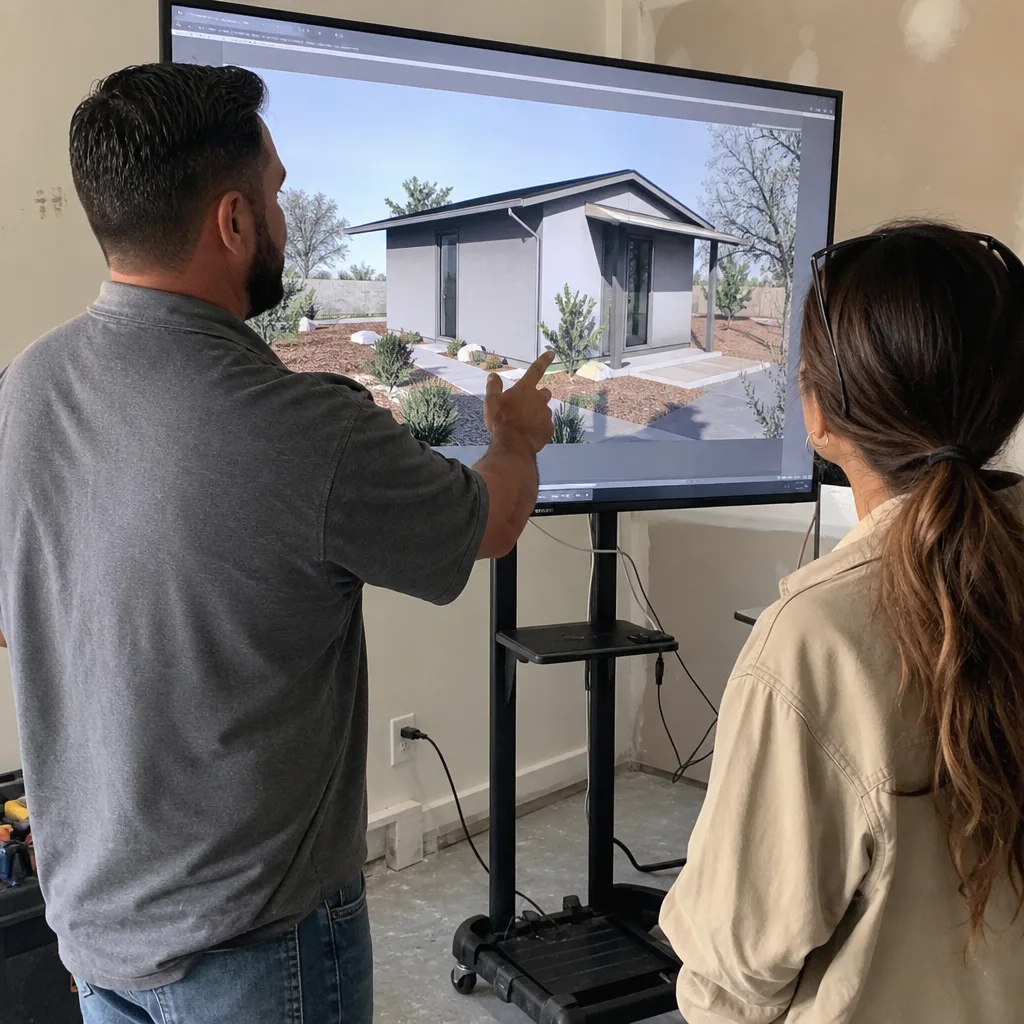
Government Code Section 65852.2 establishes two 60-day deadlines for ADU applications: 60 days for completeness review, and 60 days for approval decision after completeness is established. These are powerful tools when used correctly. They are also frequently misunderstood.
The completeness review clock. When you submit an ADU application in Hesperia, City of Hesperia Planning has 60 days to determine whether the application is complete. If they do not respond within 60 days, the application is deemed complete. But “complete” does not mean “approved.” It means the review clock starts.
What triggers a completeness finding: all required application forms, property ownership documentation, site plan, floor plan, and elevation drawings. What does not trigger it: structural calculations, energy compliance, or utility coordination letters. These are Building and Safety requirements, not Planning requirements. Submitting only Planning-level documents gets you a completeness determination, but it does not get you a permit.
The approval clock. After completeness, the agency has 60 days to approve or deny the application. “Deemed approved” applies here: no action in 60 days means automatic approval. But this is where submission gaps destroy the protection.
Common gaps that reset the 60-day approval clock in Hesperia:
- Missing structural calculations for High Desert wind loads. Building and Safety will issue a correction notice, stopping the clock until resubmission.
- Energy compliance documentation (Title 24) prepared for wrong climate zone. Hesperia is in California Climate Zone 14. Plans prepared for Zone 10 or 12 require complete recalculation.
- Fire sprinkler determination pending. If Hesperia Fire District requires a sprinkler hydraulic calculation that was not included, the application returns for supplementation.
- Utility coordination letters missing. Building and Safety will not issue a permit without confirmed water and electrical service capacity. These letters come from separate agencies with separate timelines.
- Septic evaluation not completed. For properties on septic, County Environmental Health must issue capacity approval. This is outside the 60-day ADU statute entirely.
- Recorded deed restriction missing for JADUs. Junior ADUs require a recorded deed restriction limiting sale separate from the primary dwelling. Without the recorded document, Building and Safety cannot approve.
Each correction notice resets the 60-day clock from zero upon resubmission. We have seen projects cycle through three or four completeness rounds because homeowners submitted incrementally rather than completely. Under The Haven Standard, Clause 3 (Complete Submission), our permit sets include every required document before the first submittal. The 60-day protection only works if you use it with a complete package.
Inspection Sequence for a Detached ADU in Hesperia
San Bernardino County Building and Safety schedules eight inspection hold points for a typical detached ADU in Hesperia. Each requires specific documentation and must pass before the next is scheduled. Attempting to conceal work between inspections, or scheduling out of sequence, results in required rework at the owner’s expense.
Inspection 1: Foundation / Footing
Required: approved plans on site, footing depth verification, rebar placement per structural calculations, and soil compaction documentation if engineered fill was used. In Hesperia’s expansive soil zones, particularly north of Ranchero Road, we frequently see inspectors require geotechnical observation letters that were not obtained. The footing inspection is failed, concrete cannot be poured, and the schedule shifts by two weeks minimum.
Inspection 2: Slab / Under-Floor
Required: plumbing rough-in, electrical conduit, and post-tension or reinforcing steel placement. For slab-on-grade construction, vapor barrier and insulation placement are verified. The critical documentation: plumbing pressure test certificate and electrical conduit routing as shown on approved plans.
Inspection 3: Framing
Required: wall framing, shear panel nailing patterns per structural plans, hold-down hardware installation, and rough openings for windows and doors. In Hesperia’s High Desert wind zone, inspectors verify specific nailing schedules that exceed standard California requirements. The approved structural plans must match exactly; field modifications without engineered approval fail immediately.
Inspection 4: Plumbing Rough-In
Required: water supply lines, drainage lines, vent stacks, and water heater pan and drain. Pressure test must be maintained during inspection. For ADUs with tankless water heaters, gas line sizing documentation must be available.
Inspection 5: Electrical Rough-In
Required: panel location and mounting, circuit routing, outlet and switch box placement, and grounding electrode system. For ADUs requiring electrical service upgrades, Edison must have released the service change order before this inspection is approved.
Inspection 6: Mechanical / HVAC Rough-In
Required: ductwork, refrigerant lines, and combustion air provisions for gas-fired equipment. Hesperia’s Title 24 requirements for duct sealing and insulation are verified with specific testing documentation.
Inspection 7: Insulation / Energy
Required: insulation R-values per Title 24 compliance documentation, air sealing details, and fenestration (window/door) U-factor verification. HERS rater verification is required for most new construction ADUs in California. The HERS certificate must be available at this inspection.
Inspection 8: Final
Required: all prior inspections passed, utility release letters from Hesperia Water District and Southern California Edison, final site grading per approved landscape plan, and address posting visible from the street. The final inspection is where incomplete utility coordination most commonly appears. Building and Safety will not issue final approval, and therefore certificate of occupancy, without confirmed utility service.
Each failed inspection requires correction and re-inspection. Re-inspection fees apply after the first failure. Under Haven Standard Clause 7 (Documented Progress), our crews photograph every inspection-ready condition before the inspector arrives, and clients receive those photos. If an inspector identifies an issue, we have evidence of what was built versus what was approved, and we correct from fact, not memory.
JADU Deed Restrictions and Title Pitfalls
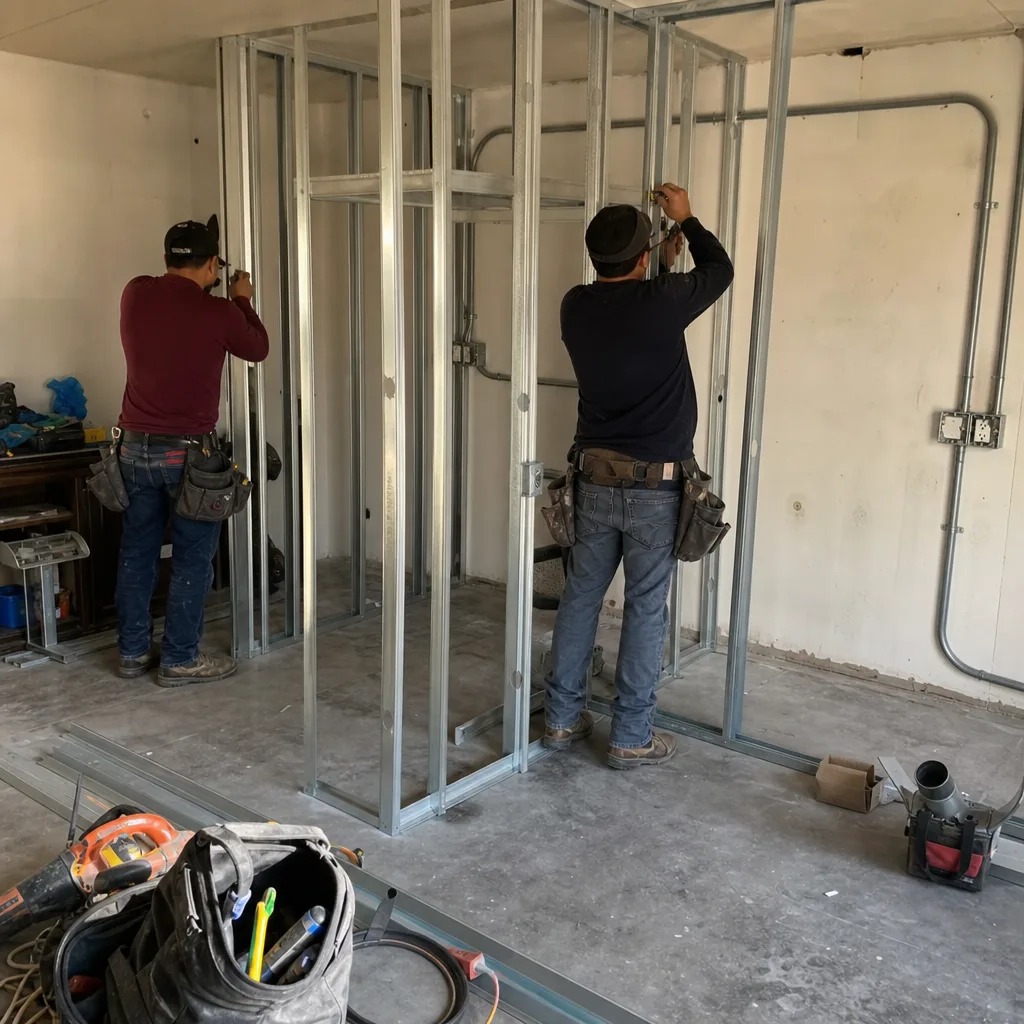
Junior ADUs (JADUs) occupy a specific regulatory category: they are created within the walls of an existing single-family dwelling, limited to 500 square feet, and require owner occupancy of either the primary dwelling or the JADU. The requirement that most homeowners overlook: the recorded deed restriction.
California Government Code Section 65852.22 requires that JADUs be subject to a deed restriction recorded against the property title. The restriction must specify that the JADU is not a separate conveyable unit, that it remains accessory to the primary dwelling, and that owner occupancy is maintained. This is not a permit condition that expires. It runs with the land.
In Hesperia, we have encountered two specific title pitfalls. First, homeowners who completed JADU conversions without recording the restriction, then attempted to refinance. Lenders conducting title searches find no recorded restriction, cannot verify JADU compliance, and either decline the loan or require retroactive recording at borrower expense. Second, homeowners who sell without disclosing the unrecorded JADU, exposing themselves to post-sale liability.
The recording process in San Bernardino County requires: approved JADU permit, completed deed restriction form (available from County Recorder), notarized signature, and recording fee. The restriction must reference the specific assessor’s parcel number and the approved JADU square footage. Generic restrictions downloaded from internet sources are frequently rejected.
For homeowners considering a garage conversion ADU in Hesperia versus a JADU, this restriction is often the decisive factor. Garage conversion ADUs do not require owner occupancy and do not require a recorded deed restriction. The regulatory burden is lower, and the title remains clean for future transactions.
What ADU Permitting and Construction Cost in Hesperia
We name dollar ranges on every page. Here is what we see in the Hesperia market for projects permitted and built through Ellery ADU Studio.
| ADU Type | Design & Permit Set | Construction (All-In) | Total Project Range |
|---|---|---|---|
| Garage Conversion ADU | $8,500 - $14,000 | $95,000 - $165,000 | $103,500 - $179,000 |
| New Detached ADU (400-600 sq ft) | $12,000 - $18,500 | $185,000 - $275,000 | $197,000 - $293,500 |
| New Detached ADU (700-1,000 sq ft) | $14,500 - $22,000 | $265,000 - $395,000 | $279,500 - $417,000 |
| Junior ADU (Interior Conversion) | $7,500 - $12,000 | $45,000 - $85,000 | $52,500 - $97,000 |
| Prefab/Modular ADU (installed) | $15,000 - $28,000 | $165,000 - $340,000 | $180,000 - $368,000 |
Permit fees in Hesperia, paid to City of Hesperia Planning and San Bernardino County Building and Safety, typically range $4,500 to $12,000 depending on ADU size and valuation. Utility connection fees add $3,000 to $15,000: Hesperia Water District meter fees, Southern California Edison service upgrade costs, and potential sewer capacity charges. These are not optional. They are hard costs that appear on every written quote we provide under Haven Standard Clause 1.
Where prefab and modular systems affect pricing: brands like Mighty Buildings, Boxabl, and Plant Prefab manufacture units to specific code certifications that can streamline Building and Safety review. But the site preparation, foundation, utility connections, and finish work remain local construction with local costs. We specify and coordinate these systems within our single-contract model, and the price includes all three layers: factory unit, site prep, and utility release.
What changes these ranges: hillside grading requirements, septic system replacement, electrical service upgrades from overhead to underground, and fire sprinkler system installation. Each is identifiable during design and priced before any work starts. We do not operate with allowances that balloon later. The scope is locked at signing per Haven Standard Clause 5 (No Surprises).
Common Mistakes to Avoid
- Assuming state law overrides local fire code. We’ve seen Hesperia homeowners cite AB 68 to dispute sprinkler requirements. Fire code is not preempted. The dispute adds weeks and damages credibility with inspectors.
- Submitting permit sets drawn for other California climate zones. Title 24 energy compliance for Hesperia requires Climate Zone 14 calculations. Plans from Zone 10 designers require complete rework.
- Neglecting the original garage permit research. For garage conversions, Building and Safety requires verification that the garage was legally constructed. Unpermitted garages require additional legalization steps that add $5,000 to $15,000.
- Scheduling utility applications after building permit approval. Water and electrical releases should be initiated during design, not after construction starts. Parallel tracking prevents the final inspection hold that kills project timelines.
- Using generic online deed restrictions for JADUs. San Bernardino County Recorder rejects restrictions that do not reference the specific APN and approved square footage. Custom preparation is required.
- Skipping geotechnical evaluation in Hesperia’s hillside zones. North Hesperia and areas above 3,200 feet elevation frequently require engineered fill or specialized foundation systems. The footing inspection fails without documentation.
- Treating prefab delivery as “plug and play.” Factory-built units from Tuff Shed, Boxabl, or other manufacturers still require foundation, utility connection, and local inspection sequencing. The unit is one component of a site-built project.
When to Call a Professional
Call a design-build studio when your project involves multiple permit agencies, when your property has any non-standard condition (hillside, septic, unpermitted existing structures), or when you need a fixed price before committing resources. The designer-versus-builder blame gap destroys timelines and budgets when drawings do not match construction reality.
Specific scenarios where professional involvement pays for itself: fire sprinkler determinations that require hydraulic calculations; structural systems that must meet High Desert wind loads; utility service upgrades requiring coordination with Southern California Edison; and any project where the 60-day approval timeline matters because of financing or tenant scheduling.
Ellery ADU Studio Hesperia offers free estimates in Hesperia. Every project is quoted with a written price before any work begins, per Haven Standard Clause 1. We also provide a Free Second Opinion on any written estimate already in hand. Call (760) 493-7752 to schedule.
Frequently Asked Questions
With a complete submittal, City of Hesperia Planning typically issues zoning clearance in 4 to 6 weeks, and San Bernardino County Building and Safety completes technical review in 6 to 10 weeks. Utility releases add 2 to 8 weeks depending on service upgrade requirements. Total timeline from application to construction start is typically 14 to 24 weeks for straightforward projects, and 24 to 40 weeks for projects requiring septic evaluation, hillside grading, or electrical service upgrades. Call (760) 493-7752 for a timeline estimate specific to your property.
No. California law guarantees that local agencies cannot impose certain barriers, like owner-occupancy requirements or excessive minimum lot sizes. It does not guarantee approval of a non-compliant design. Building code, fire code, and utility capacity requirements remain fully enforceable. In Hesperia, we see approximately 15% of initial ADU submittals returned for correction, typically for incomplete structural calculations or missing utility coordination.
Possibly. The determination depends on three factors: whether your primary dwelling has sprinklers, the ADU’s distance from property lines and other structures, and fire apparatus access. Hesperia Fire District evaluates each project individually. Detached ADUs more than 50 feet from the primary dwelling, or in locations with narrow access roads, are more likely to trigger sprinkler requirements. We obtain the fire marshal’s preliminary determination during design to price the system accurately.
No. Factory-built units from Mighty Buildings, Boxabl, Plant Prefab, or other manufacturers must still obtain California Building Code approval through the Department of Housing and Community Development or local building department, and must still pass all Hesperia inspections. The factory certification streamlines some plan review steps, but foundation, utility connection, and site-built components remain fully permitted and inspected.
An unrecorded JADU deed restriction can block refinancing, trigger lender requirements for retroactive recording at your expense, and create liability in property sale transactions. San Bernardino County Recorder requires the restriction to reference the specific assessor’s parcel number and approved square footage. We prepare and record this document as part of our JADU permitting service.
Yes. San Bernardino County Building and Safety permits expire if work does not commence within 180 days of issuance, or if work is suspended for 180 days. Extensions are available but require written request and fee payment. For ADU projects with phased construction, we track permit expiration dates and schedule work to maintain active status.
California law allows property owners to act as their own contractor on single-family dwellings, which includes ADUs. However, the owner-builder exemption requires you to personally supervise all work, obtain all permits, and carry appropriate insurance. You cannot hire a contractor and still claim owner-builder status. In our experience, owner-builders in Hesperia underestimate the inspection documentation requirements and the coordination between three agencies. The 60-day approval protection is weaker without a complete, professional permit set.
The Bottom Line
California’s ADU reforms created genuine opportunity, but they did not eliminate local complexity. State law gets you to the permit counter. Building code, fire code, utility coordination, and inspection sequencing get you to a finished, occupied unit. In Hesperia, the three-agency stack of City Planning, County Building and Safety, and utility districts operates with specific requirements that generic online advice does not address.
The projects that succeed share three characteristics: complete permit sets submitted initially, parallel utility coordination started during design, and documentation maintained at every inspection hold point. These are not secrets. They are processes, executed consistently.
Since 2015, Ellery ADU Studio has designed, permitted, and built over 900 ADUs, every one with a written price before work started and a documented photo record when complete. If you are evaluating an ADU in Hesperia, call (760) 493-7752 for a free estimate with a written quote, or bring us any written estimate for a Free Second Opinion.
Written by Nadia Ellery, Owner at Ellery ADU Studio Hesperia, serving Hesperia since 2015.