
Last updated September 25, 2026
How to Hire a ADU Contractor in Hesperia: A Step-by-Step Guide
A contractor can hold a valid California B-license, carry full insurance, and still deliver a unit that fails final inspection - because the drawings they built from were wrong and the contract assigned that problem to someone else. In Hesperia, the most common call we receive is from homeowners three months into framing who just learned their designer and their contractor have conflicting accounts of whose job it is to fix the plan-check correction. This guide will show you how to audit the permit relationship, not just the license, so your ADU project in Hesperia passes inspection the first time.
Quick Answer
To hire an ADU contractor in Hesperia, verify the CSLB license, confirm they pull their own permits in San Bernardino County, and demand a single written contract that covers both design and construction at a fixed price. The most expensive mistake is hiring a licensed builder who constructs exactly what flawed drawings show - then points to a separate designer when the city rejects it.
Table of Contents
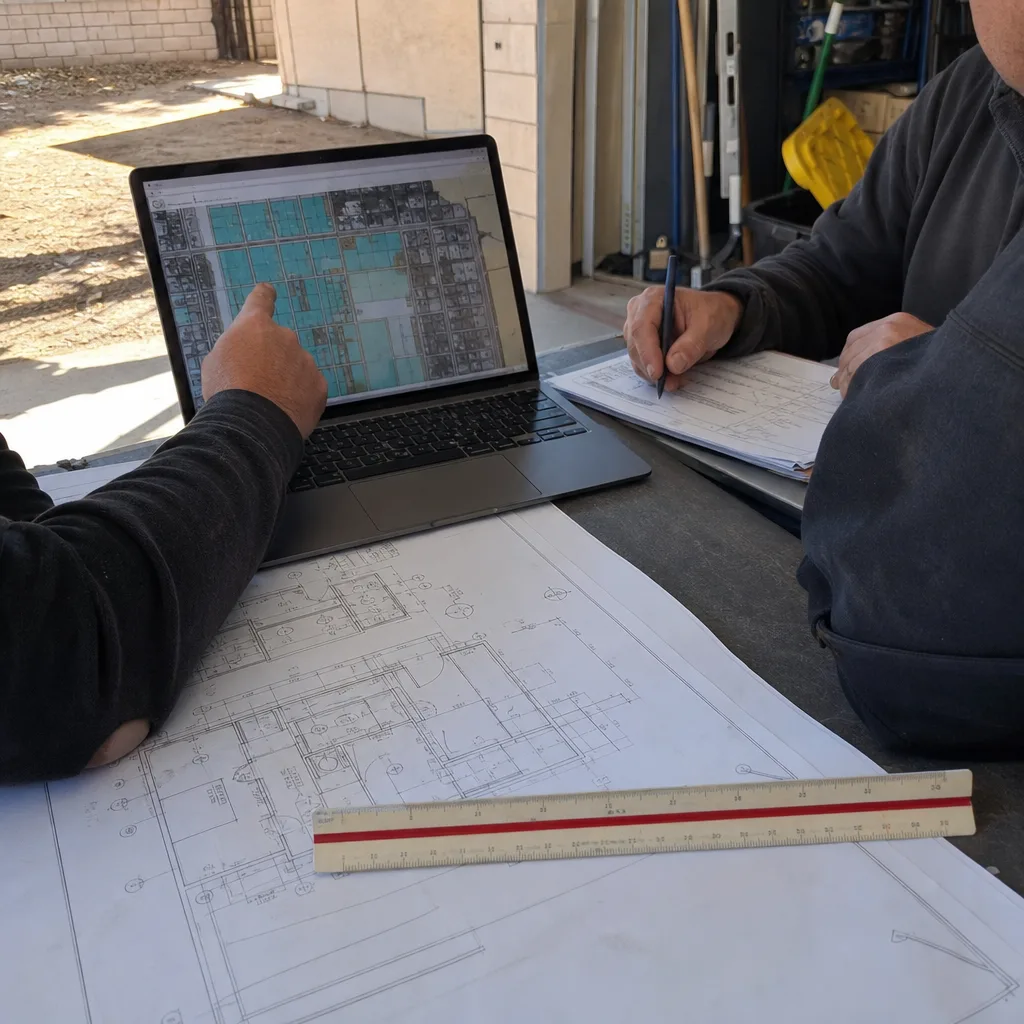
- The Designer-Builder Blame Gap: What It Is and How to Spot It
- CSLB Verification Is Step One, Not the Whole Process
- Interview Questions for Hesperia’s High Desert Conditions
- Red Flags in ADU Bids That Are Legal but Dangerous
- What a Written, Fixed-Price Design-Build Contract Should Contain
- How Hesperia’s Permit Process Shapes Your Hiring Decision
- Cost Expectations for Hesperia ADU Projects
- Common Mistakes to Avoid
- When to Call a Professional
- Frequently Asked Questions
The Designer-Builder Blame Gap: What It Is and How to Spot It
The designer-builder blame gap is the single most common failure mode in California ADU projects. It works like this: a homeowner hires an architect or designer to produce plans, then separately hires a contractor to build from those plans. When San Bernardino County plan check returns corrections - and they almost always do - the contractor says the drawings are wrong, the designer says the builder misread them, and the homeowner pays for the argument.
We’ve seen this gap open in Hesperia projects ranging from a simple garage conversion near Main Street to a detached ADU in the Oak Hills area. The symptoms appear at predictable moments:
- The contractor submits the permit application but lists the designer as the “applicant of record,” creating a liability dead end
- The contract contains a “build per plans” clause with no warranty that the plans are correct
- Change orders appear after plan-check corrections, framed as “not in scope” despite being required for permit approval
- The designer and contractor have no contractual relationship with each other, so neither has incentive to resolve conflicts quickly
The single clause that eliminates this gap is a unified design-build contract with one entity responsible for both drawings and construction. At Ellery ADU Studio Hesperia, our contract covers ADU Design & Permitting in Hesperia through final inspection. If the plan check requires a structural revision, we revise the drawings and adjust construction - same contract, same written price, no finger-pointing. Under Haven Standard Clause 5 (No Surprises), the scope is locked at signing; no door-side upsells, no scope creep.
How to spot the blame gap in a proposed contract structure: look for two separate agreements, or one agreement that references “owner-provided plans” without warranty language. Ask directly: “If the city rejects these drawings during plan check, who pays to fix them and who pays for the construction delay?” If the answer involves two phone calls to two different companies, you’re looking at the gap.
CSLB Verification Is Step One, Not the Whole Process
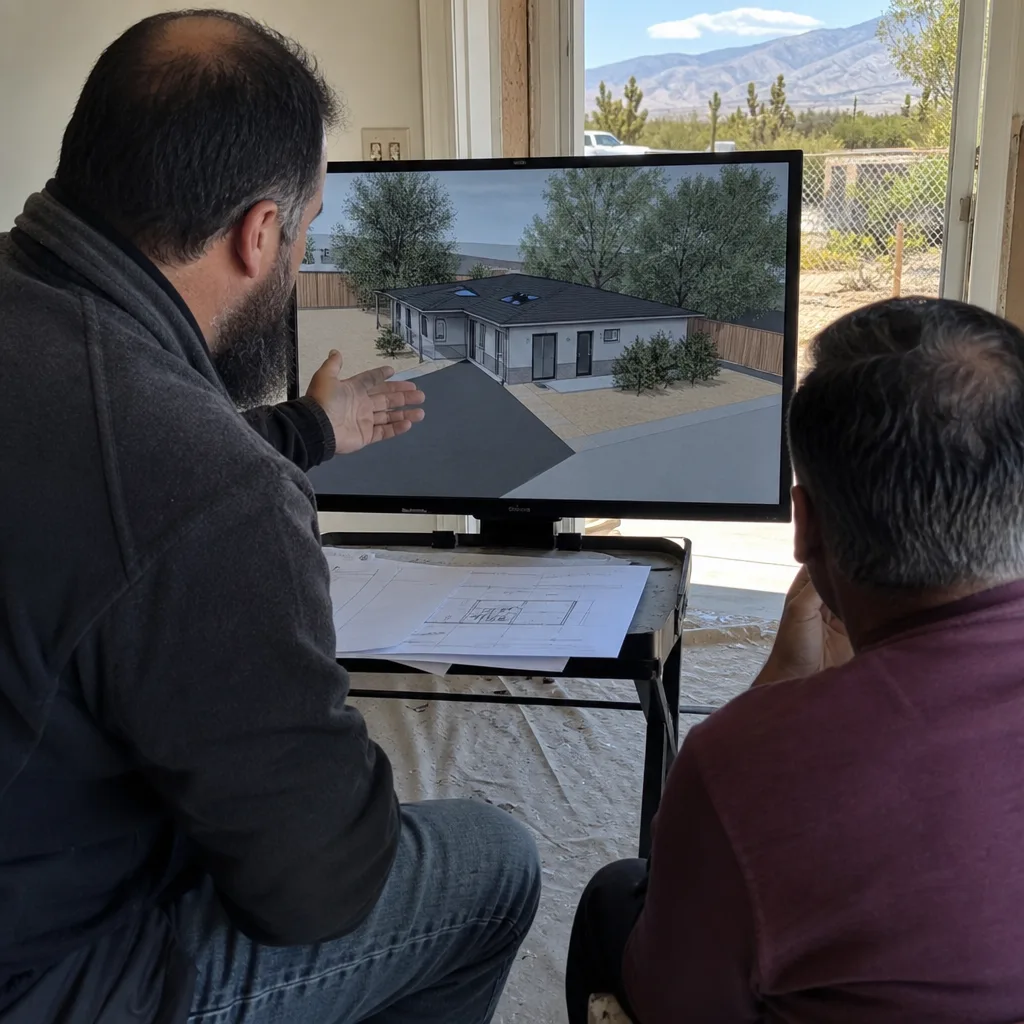
Checking a California contractor’s license at cslb.ca.gov takes ninety seconds. Most homeowners stop there. The license confirms the contractor is bonded and has workers’ compensation, but it says nothing about whether they’ve successfully permitted and passed final inspection on an ADU in San Bernardino County.
After verifying the license number, do this:
- Search pulled permit history. San Bernardino County’s public records portal shows permits by contractor license number. Look for ADU-specific permits, not just general remodeling. A contractor with twenty kitchen remodels and zero ADUs has not navigated the state density bonus law, the HCD checklist, or San Bernardino’s local amendments.
- Check final inspection pass rate. Ask for the last five ADU projects and their final inspection dates. Then verify those permits reached “Final” status in county records. A pattern of permits expired without final approval indicates a contractor who starts jobs but doesn’t close them - leaving homeowners with unpermitted units they cannot legally rent or refinance.
- Search active litigation. The San Bernardino County Superior Court case search is free. Enter the contractor’s business name and the owner’s name. A contractor in active dispute with multiple homeowners is a pattern, not a coincidence.
- Verify insurance directly. Ask for the certificate of insurance and call the carrier to confirm the policy is active. Don’t accept a PDF at face value.
In Hesperia specifically, ask whether the contractor has worked with San Bernardino County’s Land Use Services Department on ADUs since the 2020 and 2023 state law updates. The county’s ADU ordinance changed significantly; a contractor who last permitted an ADU in 2018 is working from outdated assumptions about setbacks, height limits, and parking requirements.
Our license number appears on every page of this site, and we welcome this level of verification. We’ve pulled permits on Garage Conversion ADU in Hesperia projects and New Detached ADU in Hesperia builds across the city, from the established neighborhoods near Hesperia Road to newer developments toward the Cajon Pass.
Interview Questions for Hesperia’s High Desert Conditions
Hesperia’s location in the Mojave Desert creates specific technical requirements that a generalist contractor may not anticipate. The High Desert’s freeze-thaw cycles, wind exposure, and water scarcity affect ADU design and construction in ways that show up at inspection or, worse, five years later.
Ask these questions in your contractor interviews:
- “How many ADUs have you permitted in San Bernardino County in the past two years, and what was the average plan-check round count?” In our experience, Hesperia ADU plans average two rounds of plan-check corrections. A contractor who says “usually one” is optimistic; one who says “four or five” may be submitting incomplete packages.
- “What wind-exposure design category do you use for Hesperia, and how does that affect wall bracing and roof uplift connections?” Hesperia falls in a wind zone that requires specific fastening patterns. The answer should reference ASCE 7 wind speed maps and include details like continuous load path hardware - not just “we build it strong.”
- “What’s your approach to Mojave Water Agency tap fees and septic feasibility?” Many Hesperia properties remain on septic, and the Mojave Water Agency’s capacity fees for new meter connections run significant sums. A contractor who hasn’t priced these accurately will either underbid or bury the cost in an allowance.
- “How do you handle the thermal envelope for desert climate zones?” Title 24 energy code requirements for Hesperia’s climate zone affect insulation R-values, window U-factors, and HVAC sizing. The answer should reference specific code sections and equipment specifications, not just “energy-efficient.”
- “Do you self-perform or subcontract structural, electrical, and plumbing?” There’s no wrong answer, but the contract should name the subcontractors and their license numbers. A contractor who is vague about who does the work is vague about who is responsible.
We’ve specified and coordinated prefab and modular systems from brands including Abodu, Cover, and Tuff Shed within our single-contract model. These systems require additional coordination with San Bernardino County’s plan check for factory approvals and site-specific foundation engineering - another area where the designer-builder gap opens if responsibilities are split.
Red Flags in ADU Bids That Are Legal but Dangerous
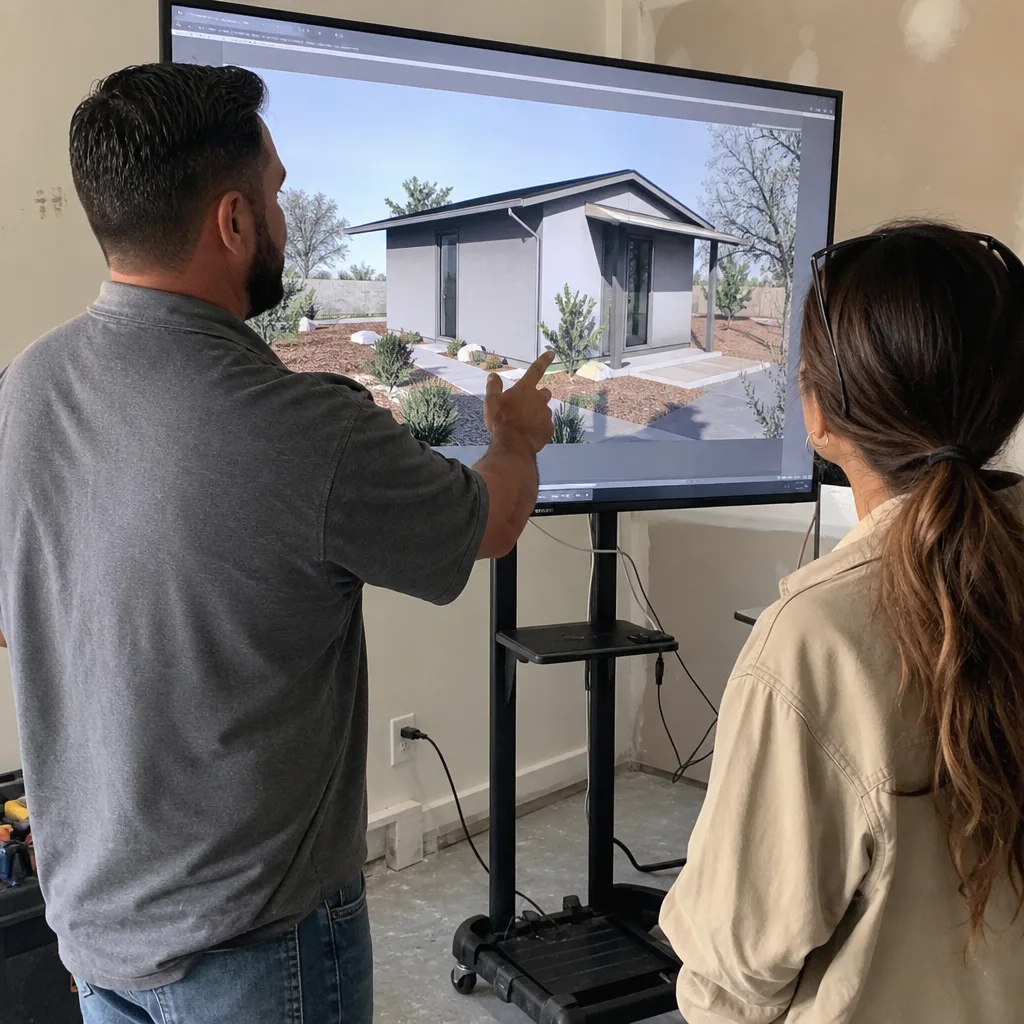
California contract law permits many practices that destroy ADU budgets. These red flags are legal; that is what makes them dangerous.
Allowances instead of line items. An “allowance” is a placeholder dollar amount for an unspecified product. A bid with $15,000 for “kitchen package” or $8,000 for “flooring” lets the contractor select the cheapest qualifying material and bill you the difference if you want anything better. In a fixed-price contract, every material should be specified or assigned a selection deadline with a defined process for price adjustment. Under Haven Standard Clause 1, every project is quoted with a written price before any work begins - the words “call for a quote” do not appear anywhere in our process.
Design-build claims without an in-house licensed designer. Many contractors advertise “design-build” but subcontract design to an outside architect with no contractual obligation to the homeowner. The contractor can blame the designer, the designer can blame the contractor, and the homeowner holds two separate contracts with no recourse. True design-build means one entity, one contract, one written price. We are a design-build studio, not a contractor who knows a guy with AutoCAD.
Verbal scope additions. Any promise not in the written contract is not a promise. “We’ll handle the retaining wall” or “the driveway apron is included” must appear as line items with quantities and specifications. We document every promise in the contract and provide a documented photo record on every visit - clients receive evidence of what was found and what was done, not a summary of how it felt.
Permit costs excluded or estimated. San Bernardino County permit fees for ADUs are calculable in advance. A bid that lists “permits: TBD” or uses a rough percentage has not done the fee verification. We calculate these fees during the estimate phase and include them in the written price.
No mention of utility service upgrades. Many Hesperia properties, especially older homes near the original town grid, have electrical panels or water services at capacity. A bid that assumes the existing service can handle an ADU without verification will generate a change order when the utility company requires a panel upgrade or new meter.
What a Written, Fixed-Price Design-Build Contract Should Contain
A proper ADU contract in Hesperia is a technical document, not a handshake in writing. These are the clauses we include in every Ellery ADU Studio contract, derived from The Haven Standard:
Clause 1: Written Price Before Any Work Starts. The total contract price, including design, permitting, construction, and all specified materials. No allowances without defined selection processes. No “plus cost of permits” language.
Clause 2: Permit Set as Core Deliverable. The drawings, calculations, and specifications that constitute the permit application. The contract specifies who owns the copyright, who can revise them, and who is responsible for plan-check corrections. In our model, we own this process entirely - the same entity that drew the plans builds from them.
Clause 3: Documented Photo Record. Every site visit produces dated, geotagged photographs uploaded to a shared project folder. The client receives evidence of what was found and what was done, not a summary of how it felt. This protects both parties and eliminates disputes about existing conditions.
Clause 4: Fixed Scope with Change Order Protocol. The scope is locked at signing. Changes require a written change order signed by both parties before work proceeds. No verbal authorizations. No “while we’re here” additions billed after the fact.
Clause 5: No Surprises. All foreseeable conditions are investigated during the estimate phase: soil conditions for New Detached ADU in Hesperia builds, existing slab condition for Garage Conversion ADU in Hesperia projects, utility capacity, and setback verification. If we miss something foreseeable, we absorb the cost.
Clause 6: 365-Day Done Right Promise. If the finished ADU is not built to the permitted drawings, we make it right - in writing, before the project starts. This is not a generic “satisfaction guarantee.” It is a specific warranty tied to the permit set and the documented photo record.
Clause 7: Subcontractor Disclosure. Every trade contractor’s name, license number, and scope of work. No undisclosed subs. No license lending.
Clause 8: Payment Schedule Tied to Inspection Milestones. Payments correspond to verified progress: foundation inspection passed, framing inspection passed, final inspection passed. Never large upfront deposits with no inspection gate.
How Hesperia’s Permit Process Shapes Your Hiring Decision
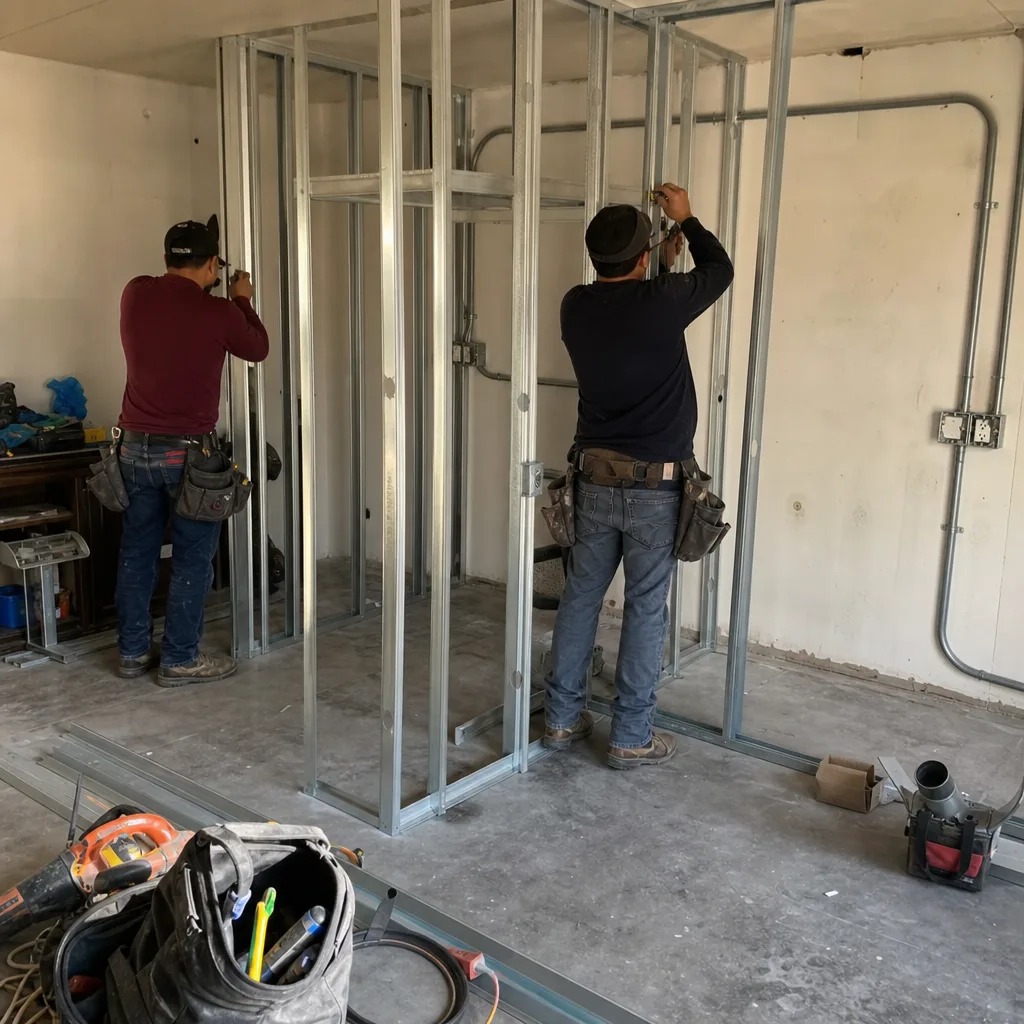
San Bernardino County’s Land Use Services Department processes ADU permits for Hesperia, not the city itself. This matters because county plan checkers apply a uniform standard across unincorporated areas and contract cities, but they also handle higher volume than a typical city planning department. The practical result: longer initial review times, more detailed correction letters, and less hand-holding for applicants who submit incomplete packages.
A contractor who expects city-style permit processing will be frustrated and will frustrate you. The county’s ADU checklist includes:
- HCD (California Department of Housing and Community Development) compliance verification for factory-built units
- Fire separation requirements for garage conversions, including specific gypsum board ratings and door assemblies
- Septic system evaluation for properties not on sewer, including percolation test documentation
- Water meter sizing confirmation from the local water agency
- Energy compliance documentation through Title 24, including CF-1R and CF-6R forms
The contractor you hire should speak this vocabulary without prompting. If you mention “CF-1R” and get a blank look, you’re talking to someone who will learn the permit process on your dime.
In Hesperia specifically, properties in the foothill areas toward the San Bernardino Mountains may trigger additional geotechnical review for slope stability or expansive soils. Properties in the flatter desert floor near the I-15 corridor may encounter caliche - cemented soil that requires specialized excavation. A contractor with local experience will have encountered these conditions and will price them accurately, not as contingencies.
Our permit sets are the core product, not an afterthought. We’ve designed, permitted, and built 900+ ADUs since 2015 - every one with a written price before work started and a documented photo record when work was complete. That volume means we’ve seen the county’s plan-check corrections evolve and can anticipate them before submission.
Cost Expectations for Hesperia ADU Projects
ADU costs in Hesperia track California averages with High Desert-specific adjustments for foundation requirements, HVAC sizing, and utility connections. These ranges reflect all-in design-build pricing - drawings through final inspection - based on projects we’ve completed in the Hesperia market:
| ADU Type | Typical Range (All-In) | Key Cost Drivers |
|---|---|---|
| Garage Conversion ADU | $95,000 - $165,000 | Existing slab condition, electrical panel capacity, fire separation upgrades |
| Junior ADU (Interior Conversion) | $75,000 - $125,000 | Separate entrance requirement, kitchen efficiency, utility metering |
| New Detached ADU (400-600 sq ft) | $185,000 - $285,000 | Foundation type, utility trenching distance, septic vs. sewer |
| New Detached ADU (600-1,000 sq ft) | $265,000 - $425,000 | Structural system, roof complexity, finish specifications |
| Site Prep & Utilities (if needed) | $15,000 - $65,000 | Grading, retaining walls, electrical service upgrade, septic expansion |
These ranges include our design, permit set, all construction, and project management under one written price. They do not include land acquisition, financing costs, or furnishings.
The most common budget surprise in Hesperia is the Mojave Water Agency connection fee for properties requiring a new or upsized meter. This can run $8,000-$20,000 depending on meter size and line extension requirements. We verify this during our site assessment and include it in the written price - not as an allowance, as a verified line item.
James Hardie siding is a specification we frequently use for Hesperia’s climate - it handles the thermal cycling and wind exposure better than vinyl alternatives in this environment. The material cost premium is typically 15-25% over basic vinyl, but the durability in desert conditions justifies the specification for most homeowners planning to hold the property long-term.
Common Mistakes to Avoid
- Hiring the lowest bid without reading the exclusions. The lowest bid often excludes permits, utility connections, or site prep - items that other bidders included. Read every exclusion line; the real price reveals itself in the fine print.
- Assuming a licensed architect protects you from buildability problems. An architect can design a beautiful ADU that no contractor can build at the budgeted price - or that San Bernardino County will reject for code compliance. Design-build integration prevents this.
- Starting construction before permit approval. Some contractors suggest “getting a head start” while plans are in review. This is a permit violation that can trigger stop-work orders, fines, and required demolition of unpermitted work.
- Ignoring septic capacity for properties on well water. Hesperia has significant areas without sewer service. A bedroom count increase without septic evaluation can halt the project at rough inspection.
- Accepting a “cost plus” contract for a defined scope. Cost plus has a role in projects with genuine unknowns, but most Hesperia ADUs have investigable conditions. Fixed price with appropriate due diligence is the better model.
- Not verifying the contractor’s current workload. A contractor with six active projects and two crews will start your job and disappear for weeks. Ask for current project count and crew allocation.
- Neglecting to confirm who pulls the permit. The permit holder of record is the party responsible for corrections and final sign-off. If your contractor asks you to pull the owner-builder permit, you are assuming liability you likely do not want.
When to Call a Professional
Call a design-build professional when you’re still in the research phase - before you’ve hired a designer, before you’ve sketched floor plans, before you’ve committed to a budget that may not match reality. The earlier the integration of design and construction expertise, the fewer expensive corrections later.
Specifically: call when you’re evaluating whether your property qualifies for an ADU under current Hesperia and San Bernardino County rules; when you need a verified all-in price before deciding whether to proceed; when you have a written estimate from another contractor and want a Free Second Opinion; or when you’ve encountered a plan-check correction that your current designer and contractor are arguing about.
Ellery ADU Studio Hesperia offers free estimates in Hesperia - call (760) 493-7752. A live person answers calls 24/7, and every project is quoted with a written price before any work begins.
Frequently Asked Questions
Garage conversion ADUs in Hesperia typically run $95,000-$165,000 all-in, while new detached ADUs range from $185,000 for smaller units to $425,000 for 1,000-square-foot builds with upgraded finishes. These ranges include design, permitting, and construction under a single written contract. Call (760) 493-7752 for an exact quote - estimates are free.
Under a properly structured fixed-price design-build contract, the price should not change unless you request additions or unforeseeable conditions emerge that were genuinely impossible to detect during due diligence. At Ellery ADU Studio, Haven Standard Clause 5 (No Surprises) locks the scope at signing, and we absorb the cost of foreseeable conditions we failed to identify. Always ask your contractor to define “unforeseeable” in writing before signing.
We pull all permits as the licensed contractor of record. The permit application lists Ellery ADU Studio, which means we are responsible for plan-check corrections, inspection scheduling, and final sign-off. Never accept a contract that requires you to pull an owner-builder permit while the contractor performs the work - this creates liability gaps and can void your homeowner’s insurance if problems arise.
From signed contract to final inspection, a garage conversion ADU in Hesperia typically takes 4-6 months, while a new detached ADU takes 8-14 months depending on complexity and San Bernardino County plan-check volume. These timelines assume no major plan-check revisions and prompt utility connection scheduling. We provide a detailed schedule with milestones during the estimate phase, tied to inspection gates in the payment schedule.
Yes, prefab and modular ADUs are permitted in Hesperia through San Bernardino County’s factory-built unit program, but they require HCD approval documentation, site-specific foundation engineering, and coordination with local utility connections. We’ve specified and coordinated systems from Abodu, Cover, and Tuff Shed within our single-contract model - the factory warranty and our construction warranty are integrated, not separate responsibilities.
With a single-contract design-build agreement, the same entity that designed the unit is responsible for correcting any inspection failure and completing the work to pass. Under our 365-Day Done Right Promise, if the finished ADU is not built to the permitted drawings, we make it right - in writing, before the project starts. With a split designer-contractor arrangement, you may face conflicting accounts of who pays for corrections and who performs the rework.
The Bottom Line
Hiring an ADU contractor in Hesperia requires verifying more than a license number. The critical audit is the permit relationship: who owns the drawings, who answers to the county when corrections arise, and whose written contract covers both. A valid B-license means the contractor can build; it does not mean they can design, permit, and warranty an integrated project. Demand a single written contract at a single fixed price, with documented accountability for every phase from site assessment through final inspection. The homeowners we hear from in crisis are not the ones who hired unlicensed builders. They are the ones who hired licensed, insured contractors with a gap between their designer and their builder - and a contract that let each blame the other.
Written by Nadia Ellery, Owner at Ellery ADU Studio Hesperia, serving Hesperia since 2015.