
Last updated September 25, 2026
Seasonal ADU Care for Hesperia: Year-Round Homeowner’s Guide
Hesperia recorded a 114°F high in July 2023 and a 14°F low that following January. That 100-degree thermal swing is not a footnote - it’s the operating condition your ADU lives in. An accessory dwelling unit built to California minimums but never maintained for High Desert reality will need a new HVAC unit by year eight and roofing by year twelve. Both fail earlier than identical construction in Riverside or San Diego would. This guide maps what Hesperia homeowners should do, when, and why the Mojave Desert’s specific physics demand a different calendar than coastal California guides suggest.
Quick Answer
ADU maintenance in Hesperia follows a two-season rhythm driven by extreme thermal swing: winter prep focuses on freeze-thaw protection for plumbing and concrete, while summer prep centers on heat degradation of roofing, HVAC, and weatherstripping. Year-round, document everything with dated photos tied to your permit set - this habit supports warranty claims, insurance adjustments, and resale value.
Table of Contents
- Winter Tasks: November-February - Freeze-Thaw Defense
- Spring Tasks: March-May - Recovery and Inspection
- Summer Tasks: June-September - Heat Degradation Management
- Fall Tasks: October - Pre-Winter Sealing
- Wind Event Protocol: Post-Santa Ana Inspection
- Water-Use Discipline: Mojave Water Agency Realities
- The Documentation Habit: Photos, Permits, and Protection
Winter Tasks: November-February - Freeze-Thaw Defense
High Desert winters kill ADU systems through repetition, not single catastrophic events. Hesperia’s overnight lows routinely drop below 25°F from December through February. Each freeze-thaw cycle expands water in micro-cracks by about 9%. Do that forty times per winter and concrete spalls, copper pipe splits, and exterior caulk fails.
We see this pattern in Hesperia’s older neighborhoods - Oak Hills, the ranch properties along Ranchero Road, and the pre-2000 stock south of Main Street - where garage conversion ADUs often inherit the main house’s original slab and plumbing routing. The garage conversion ADU in Hesperia is particularly vulnerable because the existing slab was never poured with freeze-thaw spacing in mind.
Pipe Insulation Inspection
Inspect all exposed plumbing monthly from November through February. In Hesperia, “exposed” means anything in an unconditioned crawl space, attic, or exterior wall cavity. The relevant standard is R-3 minimum insulation on domestic hot and cold lines in unconditioned spaces - but R-3 is a minimum, not a recommendation.
Check these specific points:
- Exterior hose bibs and their interior shut-off valves. If your ADU has a separate meter, the main shut-off is likely in a sidewalk box - verify the box drain is clear so standing water doesn’t freeze against the valve body.
- Penetrations where plumbing exits the slab. In Hesperia’s expansive clay soils, slab movement can compress insulation at these points over time.
- Any PEX routing through attic space. PEX tolerates freezing better than copper, but fittings do not. A brass crimp ring that sees repeated flex will eventually weep.
Replace compressed or moisture-saturated insulation immediately. Wet insulation conducts cold faster than no insulation.
Exterior Penetration Caulk Check
Silicone and polyurethane caulk stiffen in cold. In Hesperia’s dry winter air, they also shrink. Walk the ADU exterior with a flashlight after dark, looking for light leaks around windows, doors, vent terminations, and where utilities penetrate the envelope.
Pay particular attention to:
- Dryer vent and range hood terminations - the warm moist exhaust creates thermal stress at the penetration
- Electrical service entry and exterior outlet boxes
- Window flanges where they meet stucco or siding - James Hardie panel systems, for example, require specific sealant at the butt joints that many installers under-apply
Re-caulk with a product rated for 50-year durability and temperature range -20°F to 350°F. The labor is an hour; the water damage from a failed penetration is not.
Heating System Filter Schedule
Hesperia’s dust loading is severe. The Mojave’s fine particulate - silicates, calcium carbonate, and organic matter from seasonal wind events - loads filters faster than manufacturer estimates assume. A filter rated for 90 days in a coastal climate is a 45-day filter in Hesperia.
We specify MERV 11 minimum for ADU HVAC systems in this market. Below MERV 11, the dust passes through and plates the evaporator coil, reducing heat transfer efficiency by 10-15% per season. A plated coil in summer means the compressor runs longer, hotter, and fails sooner.
Schedule: new filter November 1, January 1, and March 1. Mark the filter frame with a Sharpie date. If you hold the used filter to light and cannot see through it, you waited too long.
Spring Tasks: March-May - Recovery and Inspection
Spring in Hesperia is brief and violent. March can still freeze; April brings 80°F days. This thermal whiplash reveals what winter damaged.
Concrete and Foundation Survey
Walk every concrete surface - patio, walkway, driveway approach, and the ADU slab itself if exposed. Look for spalling (surface flaking), pop-outs (small conical fractures), and hairline cracks that have widened since fall. In Hesperia, a crack that grows from hairline to 1/8 inch over one winter is active and needs monitoring.
For new detached ADU in Hesperia projects we design, we specify 4,000 PSI concrete with air entrainment for all exterior flatwork. Air entrainment creates microscopic voids that accommodate freeze expansion. If your ADU’s concrete was poured without it - common in pre-2020 construction - spring is when the damage becomes visible.
Document with dated photos. A crack pattern photographed annually becomes evidence if foundation movement affects door operation or window function.
Roofing: Post-Winter Condition Baseline
Before summer heat arrives, establish your roof’s condition. In Hesperia, this means:
- Clear all debris from valleys, crickets, and behind chimneys. Spring winds deposit surprising volumes of organic matter that hold moisture against the membrane.
- Inspect flashing at all penetrations - vents, mechanical equipment, solar mounts. The metal expands in summer; if winter movement has loosened fasteners, summer thermal cycling will complete the failure.
- Check gutter attachment and slope. Hesperia’s intense rain events, though infrequent, come fast. A detached gutter dumps water against the foundation.
For TPO (thermoplastic polyolefin) membranes, look for seam lifting and membrane shrinkage at terminations. TPO shrinks measurably in Hesperia’s temperature range; a properly installed system has expansion accommodation at perimeters. If you see the membrane pulling from walls or curbs, the original installation lacked this detail.
HVAC: Pre-Load System Test
Run cooling mode for 30 minutes in late April. Measure supply air temperature at a central register with a digital thermometer. A properly charged system in Hesperia should deliver supply air 14-20°F below return air temperature. If the split is narrower, you have a refrigerant issue, airflow restriction, or compressor efficiency loss - all of which will fail catastrophically under July load.
Schedule any needed service before May 15. HVAC contractor availability compresses dramatically once the first 105°F day hits.
Summer Tasks: June-September - Heat Degradation Management
Hesperia’s summer is not merely hot; it is persistently, cumulatively destructive. Sustained temperatures above 100°F accelerate chemical degradation of roofing polymers, HVAC refrigerant breakdown, and weatherstripping plasticizer loss. Manufacturer warranties based on “typical” California conditions do not apply here.
Roof Membrane Inspection Thresholds
TPO and modified bitumen - the two most common ADU roofing systems in Hesperia - fail differently under heat load.
TPO: Heat accelerates plasticizer migration and seam degradation. Inspect monthly June through September. Specific thresholds:
- Surface crazing (fine cracking pattern) visible from the roof edge: schedule replacement within 24 months
- Seam separation exceeding 1/4 inch: immediate repair; water intrusion at seams destroys insulation below
- Membrane shrinkage exposing fasteners: immediate repair; fastener back-out is progressive
Modified bitumen: The asphalt modifier softens in sustained heat. Walk the roof early morning; soft spots that hold footprint depression indicate excessive softening. Granule loss exposing the black substrate accelerates heat absorption and softening further - a feedback loop.
For homeowners considering ADU Design & Permitting in Hesperia, we specify cool-roof rated TPO with 0.70 minimum solar reflectance index (SRI) for all flat or low-slope ADU roofs. The material cost premium is 8-12%; the cooling load reduction is 15-25% in Hesperia’s climate.
HVAC Refrigerant Pressure Baseline
Have a licensed technician record subcooling and superheat values in June, when ambient temperatures are moderate. These values establish your system’s baseline. Re-measure in August after sustained 110°F+ operation.
A refrigerant charge that measures correct at 95°F ambient will read low at 115°F - but the system may actually be undercharged. The June baseline prevents misdiagnosis. We have seen compressors replaced unnecessarily in Hesperia because August pressure readings were misinterpreted without seasonal context.
Also verify condenser coil cleanliness monthly in summer. Hesperia’s dust coats coils rapidly. A 20% airflow reduction at the condenser raises head pressure and compressor discharge temperature proportionally. The compressor doesn’t fail immediately; it fails in year six instead of year twelve.
Attic Ventilation Adequacy Check
Attic temperature in an unventilated Hesperia ADU can exceed 160°F. This heat radiates through ceiling insulation, increases cooling load, and degrades any wiring, plumbing, or ductwork in the attic space.
Verify these minimums:
- 1 square foot of net free vent area per 150 square feet of attic floor, split evenly between intake (soffit) and exhaust (ridge or gable)
- Soffit vents unblocked by insulation - baffles must maintain 2-inch clear airspace
- Ridge vent continuous and unbroken; Hesperia’s wind-driven sand can clog ridge vent mesh over 3-5 years
If your ADU uses a conditioned attic (common with some Ellery ADU Studio Hesperia home designs using spray foam), verify the foam’s exposed surface is protected from UV through the designed assembly. Exposed spray foam degrades rapidly in attic UV exposure.
Weatherstripping and Seal Replacement
Replace door and window weatherstripping before summer peak. In Hesperia, the combination of heat and UV degrades rubber and vinyl formulations faster than inland valley climates. Silicone-impregnated bulb weatherstripping lasts longer than vinyl V-strip in this environment.
Check the garage door if your ADU is a conversion - the bottom seal and side seals are often original to the door and hardened beyond function. A failed garage door seal admits dust, heat, and rodents.
Fall Tasks: October - Pre-Winter Sealing
October is Hesperia’s maintenance window: warm enough to work comfortably, cool enough that materials cure properly, before the Santa Ana wind season begins.
Exterior Coating and Sealant Refresh
Inspect all exterior sealant joints. Re-caulk any that failed or are suspect. Paint or coat any exposed wood before November; latex paint cures poorly below 50°F, and Hesperia’s November nights often drop below that threshold.
For James Hardie fiber-cement siding - specified on many of our ADU projects for fire resistance and dimensional stability - verify that caulking at butt joints, inside corners, and window perimeters is intact. Hardie is stable, but the sealant is not. A failed joint admits water that wicks behind the panel and damages the substrate.
Irrigation System Winterization
See the detailed water-use section below, but the October action is: shut off supply, drain backflow preventer, blow out lines with compressed air if drip system is extensive. A hard freeze in Hesperia’s December-January period will split PVC lines and crack vacuum breakers.
Heating System Pre-Season Service
Schedule furnace or heat pump service in October. Verify:
- Heat exchanger integrity (furnace) - carbon monoxide risk
- Defrost cycle operation (heat pump) - Hesperia’s cold nights trigger frequent defrost; failed defrost controls ice the coil
- Filter replacement - start the season clean
- Thermostat calibration - a thermostat reading 2°F high costs significant energy over a Hesperia winter
Wind Event Protocol: Post-Santa Ana Inspection
The Santa Ana winds are not merely inconvenient for Hesperia ADU owners. Sustained winds of 40-60 mph, with gusts exceeding 80 mph, test every attachment point on a structure. The National Weather Service records Santa Ana events primarily October through March, with peak frequency December-January.
After any significant wind event - defined as sustained winds above 35 mph or any gust above 50 mph - perform this inspection within 48 hours:
- Roofing fasteners: Walk the perimeter with binoculars, looking for displaced or lifted shingles, tiles, or membrane edges. On low-slope roofs, check metal edge flashing for wind uplift. A lifted edge in one event will be a detached edge in the next.
- Vent caps: Verify all plumbing vents, dryer vents, and mechanical vents retain their caps. A missing cap admits rain directly into the system. In Hesperia’s wind-driven rain events, this is a common water damage source.
- Site-built perimeter fencing: Any fence attached to the ADU structure - whether for patio enclosure, trash enclosure, or privacy - transfers wind load to the ADU walls. Check posts for looseness, concrete footing exposure, and connection hardware. A fence that becomes a sail in 70 mph wind can damage the structure it leans against.
- Prefabricated unit-specific checks: For new detached ADU in Hesperia projects using factory-built systems like Abodu or Cover, verify that transport-sealed joints and module connections have not separated. These systems are engineered for wind load, but the connection details are critical.
- Window and door latching: Wind pressure can deform frames enough that latches no longer engage fully. Test every operable unit.
Document findings with dated photos. Insurance claims for wind damage require evidence of the event’s timing and the damage’s immediacy. A photo timestamped within 48 hours of a named wind event satisfies this requirement.
Water-Use Discipline: Mojave Water Agency Realities
Hesperia sits within the Mojave Water Agency service area. The agency operates tiered rate structures that penalize high-volume users, and California’s drought response framework imposes usage restrictions that can change with 30-day notice. An ADU with inefficient landscaping or undetected leaks faces punitive water bills.
Landscaping Schedule
Establish drought-tolerant landscaping at ADU installation and maintain it. Hesperia’s evapotranspiration rate in July exceeds 8 inches; no turf grass survives this without irrigation volumes that trigger tier-3 rates.
Recommended plant palette: Mojave native species - creosote bush, desert willow, California buckwheat, penstemon. These survive on rainfall once established (typically 2-3 years) and require no supplemental irrigation.
If irrigation is necessary:
- Drip only; no spray heads - wind and evaporation waste 40%+ of spray irrigation in Hesperia
- Pressure-compensating emitters at 1 gallon per hour, spaced per plant water-use zone
- Separate valve zones for established vs. establishing plantings
- Smart controller with rain shut-off and soil moisture override
Drip System Winterization
As noted in fall tasks, but with specific sequence:
- Shut off water supply at isolation valve
- Open all manual drains and low-point bleeds
- Remove and drain backflow preventer; store indoors if above-ground
- Blow out lines with compressed air at 50 PSI maximum if system has elevation changes or long runs
- Remove end caps and drain lateral lines
Failure to winterize risks split poly tubing and cracked emitters. Replacement in spring is possible, but the water waste from a cracked line running undetected for weeks is expensive.
Meter-Read Baseline for Leak Detection
Establish your ADU’s baseline consumption. Turn off all water uses, verify no toilets are cycling, and read the meter. Wait two hours. Re-read. Any movement indicates a leak.
Record this baseline monthly. In Hesperia’s tiered rate structure, a leak that adds 5,000 gallons monthly moves you from tier 1 to tier 2 pricing on all consumption, not just the excess. A running toilet can cost $200+ monthly before you notice.
For ADU Site Prep & Utilities projects, we specify separate water meters where feasible. This isolates consumption for billing accuracy and leak detection. The permit set includes the meter location and isolation valve detail - part of the documentation package every ADU Design & Permitting in Hesperia client receives.
The Documentation Habit: Photos, Permits, and Protection
This section is not optional advice. It is the difference between a warranty claim honored and denied, an insurance adjustment paid or disputed, a resale value supported or questioned.
The Dated Photo Log
Every maintenance action described in this guide should be photographed with date stamp. The photo should show:
- The condition found (dirty filter, cracked caulk, lifted shingle)
- The action taken (new filter installed, caulk replaced, shingle re-secured)
- The broader context (room, exterior wall, roof area) for location reference
Store these chronologically with the ADU’s permit set, final inspection sign-off, and any manufacturer warranties. Cloud storage is acceptable; physical backup is prudent.
Permit Set Reference
The permit set is not merely a bureaucratic artifact. It documents what was approved, what was inspected, and what standards applied. When a warranty claim or insurance dispute arises, the permit set establishes the baseline condition.
At Ellery ADU Studio Hesperia home, every project includes a documented photo record on every visit - clients receive evidence of what was found and what was done, not a summary of how it felt. This same discipline, applied by the homeowner post-construction, extends that protection indefinitely.
Insurance and Resale Value
Homeowner’s insurance policies increasingly require maintenance documentation for outbuilding claims. An ADU with five years of dated maintenance photos presents differently than one with none. In Hesperia’s fire-prone environment, documentation of defensible space maintenance, roofing condition, and exterior coating integrity supports both insurance renewals and claim processing.
For resale, a maintained ADU with documentation commands higher value and faster sale. Buyers’ inspectors find fewer surprises; lenders see lower risk. The documentation habit is a financial asset.
Common Mistakes to Avoid
- Treating Hesperia like Los Angeles. Maintenance intervals valid for coastal or basin climates fail here. Filters need replacement twice as often; caulk inspection is quarterly, not annual; roof inspection is monthly in summer, not biannual.
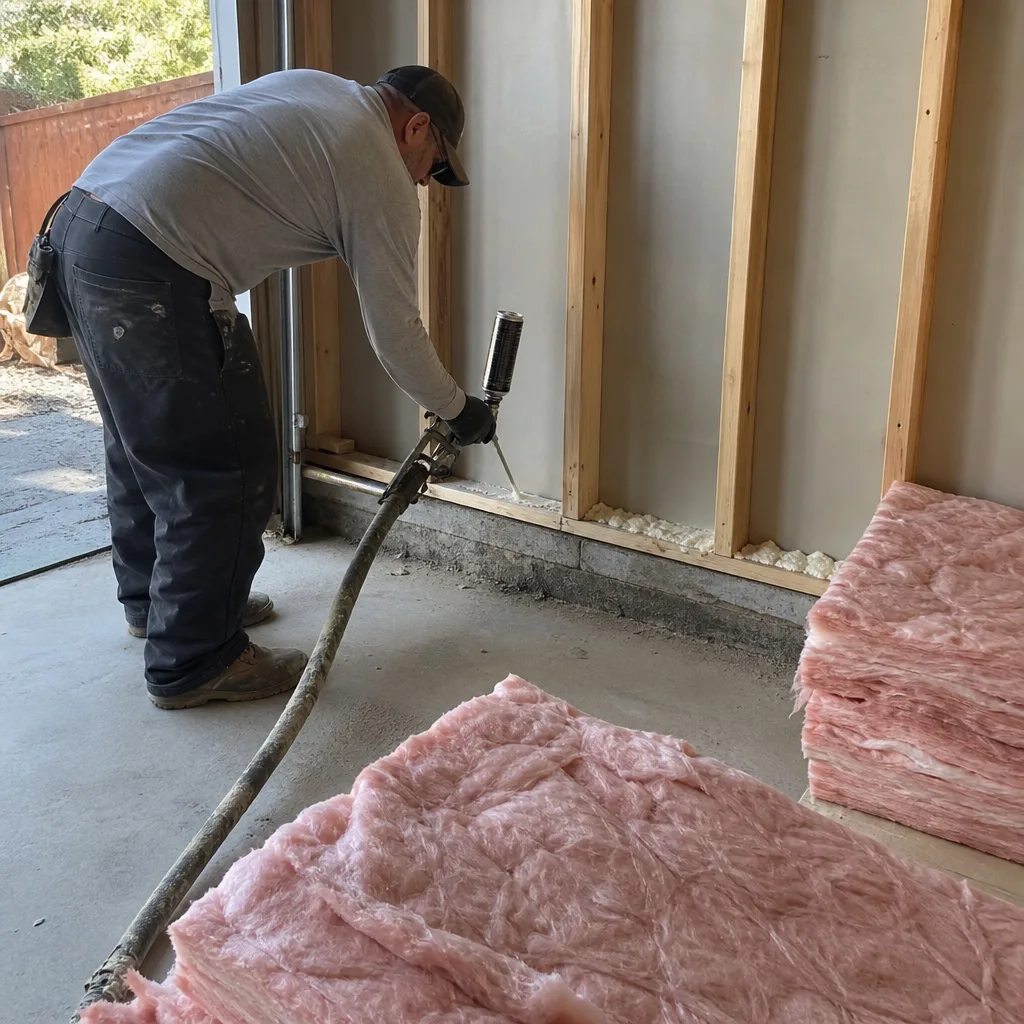
- Ignoring the garage conversion’s inherited vulnerabilities. A garage conversion ADU in Hesperia often retains the original slab, roof structure, and utility routing of a building never designed for habitation. These systems age faster than new construction and need more frequent inspection.
- Skipping the spring concrete survey. Small cracks in March become spalled surfaces by June. The repair cost difference is 10x.
- Running HVAC without verified charge. An undercharged system in Hesperia summer runs continuously, degrading the compressor. The $150 service call prevents the $3,500 replacement.
- Neglecting Santa Ana post-event inspection. Wind damage is progressive. A lifted shingle in December becomes a roof leak in February’s rain. The 30-minute inspection prevents the $8,000 interior repair.
- Underestimating Mojave Water Agency tier impact. Many Hesperia ADU owners are surprised by their first summer water bill. Establish efficient landscaping at installation; don’t retrofit after sticker shock.
- Failing to document. Every warranty claim denied for “lack of maintenance evidence” represents a documentation failure, not a product failure.
When to Call a Professional
Some maintenance tasks require licensed expertise. Call a professional for: refrigerant handling (EPA Section 608 certification required); electrical panel work or any circuit modification; roof work on slopes exceeding 4:12 or any work involving structural attachment; foundation crack monitoring or repair; gas line inspection or appliance connection.
For ADU-specific concerns - structural movement, permit compliance questions, or evaluation of whether inherited systems in a conversion meet current code - ADU Design & Permitting in Hesperia expertise matters. Ellery ADU Studio Hesperia offers free estimates in Hesperia. Call (760) 493-7752 to schedule.
Frequently Asked Questions
Inspect monthly June through September, and within 48 hours of any Santa Ana wind event above 35 mph sustained. Hesperia’s sustained summer heat and seasonal wind events degrade roofing faster than manufacturer estimates assume for “typical” California conditions. Call (760) 493-7752 for a free estimate if you find membrane lifting, fastener exposure, or granule loss exceeding 30% of any surface area.
Surface spalling - flaking or scaling of the concrete surface - is the first visible sign. Pop-outs, small conical fractures where aggregate particles have expanded and detached, indicate active freeze-thaw cycling. Hairline cracks that widen measurably over one winter are also concerning. In Hesperia, these patterns appear most often on garage conversion ADUs with pre-2000 slabs poured without air entrainment. Document with dated photos and monitor annually; structural evaluation is warranted if cracks exceed 1/4 inch width or show vertical displacement.
Professional winterization of a typical drip system runs $150-$300, depending on zone count and whether blow-out is required. DIY winterization costs only time and a compressor rental, but missed steps are expensive - a cracked backflow preventer replacement is $200-$400, and undetected line leaks can trigger Mojave Water Agency tier-2 or tier-3 rates for months. Under Haven Standard Clause 1, every Ellery ADU Studio project is quoted with a written price before any work begins - no estimate range without commitment.
Not without more frequent maintenance. Hesperia’s summer runtime hours and dust loading reduce HVAC lifespan by 20-30% compared to coastal climates. A unit rated for 15 years in San Diego is typically an 10-12 year unit in Hesperia. The difference is filter discipline, coil cleanliness, and verified refrigerant charge - all items within homeowner control. Replace filters every 45 days in summer; schedule professional service annually before peak season.
Most maintenance - filter replacement, caulking, cleaning - requires no permit. Work that alters structural, electrical, plumbing, or mechanical systems does. In Hesperia, permit requirements mirror San Bernardino County code: roofing repair exceeding 100 square feet, electrical circuit additions, plumbing line modifications, and HVAC refrigerant line alteration all require permits. The original permit set for your ADU establishes the approved configuration; deviations without permit update can complicate resale or insurance claims. Ellery ADU Studio maintains permit set archives for all 900+ projects completed since 2015.
Document immediately. Photograph damage within 48 hours of the wind event, with timestamp, and cross-reference the National Weather Service event record for that date. Most policies cover sudden, direct wind damage but exclude damage from “lack of maintenance” - a lifted edge that was visible before the event may be denied. Your dated maintenance photo log, referenced against the permit set’s original condition, supports your claim. For significant structural damage, a professional assessment with written report strengthens the submission further.
The Bottom Line
Hesperia’s ADU maintenance calendar is dictated by two forces coastal guides ignore: freeze-thaw cycles that destroy concrete and plumbing from November through February, and sustained 110°F+ summer temperatures that degrade roofing, HVAC, and weatherstripping on accelerated timelines. The homeowner who inspects monthly in summer, winterizes thoroughly in fall, documents everything with dated photos tied to the permit set, and responds within 48 hours to Santa Ana wind events will see their ADU outlast identical construction maintained on a generic California schedule. The cost difference is modest; the lifespan difference is measured in years.
Written by Nadia Ellery, Owner at Ellery ADU Studio Hesperia, serving Hesperia since 2015.